The Invisible Shield: How Sterile Processing Departments Quietly Protect Every American Surgical Patient
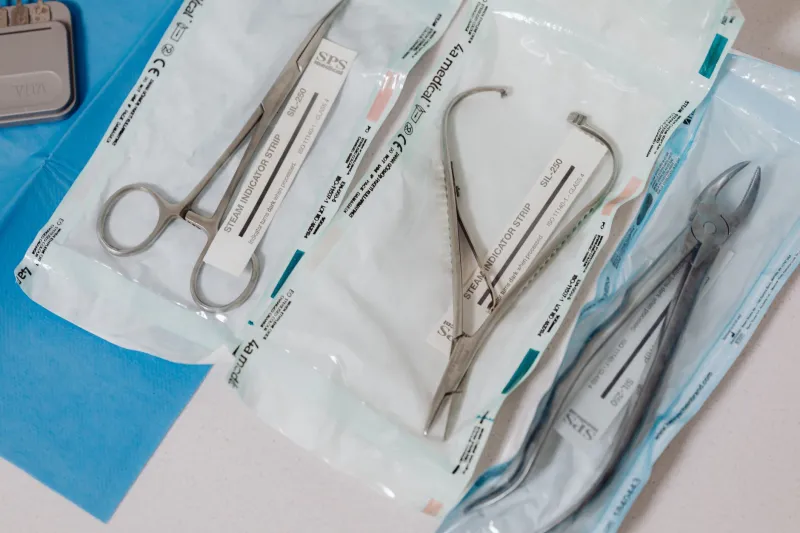
When most people imagine the journey of a surgical patient, they picture the operating room — the bright lights, the masked surgeons, the choreographed precision of a skilled medical team. What rarely enters that mental image is the department operating silently in the background, hours before the patient is ever wheeled in. Sterile processing departments (SPDs) are the unseen infrastructure of patient safety, and their work is nothing short of foundational to every successful surgical outcome in the United States.
At SteriPuram, precision care is not a slogan — it is a commitment that begins long before a procedure is scheduled. Understanding what happens to surgical instruments before they reach the operating room is not merely an academic exercise. It is a matter of life, health, and measurable outcomes.
What Sterile Processing Actually Involves
Sterile processing is the systematic process by which used surgical instruments are decontaminated, inspected, assembled, sterilized, and stored until needed again. The workflow follows a strict sequence that leaves no room for shortcuts. Instruments pass through a decontamination zone where biological matter is removed using enzymatic detergents and automated washers. They are then inspected under magnification for damage or residue, assembled into trays, wrapped or placed in sealed pouches, and subjected to high-temperature steam sterilization — a process known as autoclaving — or, for heat-sensitive items, low-temperature chemical sterilization methods such as ethylene oxide or hydrogen peroxide plasma.
Each step is governed by standards issued by organizations including the Association for the Advancement of Medical Instrumentation (AAMI), the Joint Commission, and the Centers for Disease Control and Prevention (CDC). These are not suggestions. They are the benchmarks that separate a facility committed to sterile standards from one operating on assumption.
 Photo: The Joint Commission, via cdn.britannica.com
 Photo: Centers for Disease Control and Prevention, via vectorseek.com
 Photo: Association for the Advancement of Medical Instrumentation, via maju.paymentprocessingpage.com
The Numbers Behind the Stakes
The consequences of lapses in sterile processing are not hypothetical. According to the CDC, approximately 1.7 million healthcare-associated infections (HAIs) occur in U.S. hospitals each year, contributing to roughly 99,000 deaths annually. Surgical site infections (SSIs) represent one of the most common and costly HAI categories, with the average SSI adding an estimated $20,000 to $90,000 in additional treatment costs per case, depending on severity and the procedure involved.
A landmark study published in the American Journal of Infection Control found that inadequate instrument reprocessing was a contributing factor in a significant proportion of SSI outbreaks investigated across American hospitals. Instrument contamination — whether from residual biofilm, improper packaging, or sterilization failures — can introduce pathogens including Staphylococcus aureus, Pseudomonas aeruginosa, and even drug-resistant organisms like MRSA directly into surgical wounds.
These are not abstract risks. They are preventable events, and the prevention begins in the sterile processing department.
Technology Driving Modern Sterilization
The sterile processing landscape has evolved considerably over the past two decades. Contemporary SPDs employ a range of sophisticated technologies designed to eliminate both human error and biological threat.
Automated instrument tracking systems now use barcode and RFID technology to monitor every tray through each phase of reprocessing. If a tray is improperly assembled, bypasses a sterilization cycle, or is approaching the end of its sterility maintenance window, the system flags it before it ever reaches the operating room. This level of traceability was simply not possible with older manual documentation methods.
Biological indicators — small test devices placed inside sterilization loads — confirm that sterilization conditions were actually achieved, not merely that the equipment ran a cycle. Chemical indicators on packaging provide a visual confirmation that items have been exposed to sterilization parameters. Together, these tools form a layered verification system that upholds sterile standards even when equipment performs unexpectedly.
Advanced washer-disinfectors now incorporate thermal disinfection phases that achieve validated log reductions in microbial load before instruments even reach the sterilizer. For complex instruments such as flexible endoscopes — which cannot withstand high-temperature sterilization — automated endoscope reprocessors (AERs) provide standardized, reproducible high-level disinfection cycles that manual cleaning alone cannot reliably replicate.
The Human Element: Training and Credentialing
Technology is only as effective as the professionals operating it. Certified Registered Central Service Technicians (CRCSTs) are the trained specialists responsible for instrument reprocessing in accredited facilities. Certification through the Healthcare Sterile Processing Association (HSPA) requires demonstrated competency in decontamination, sterilization science, microbiology principles, and regulatory compliance.
As of recent years, a growing number of U.S. states have enacted legislation mandating CRCST certification for sterile processing personnel, recognizing that this workforce directly influences patient outcomes. Facilities that prioritize credentialed staffing and ongoing education in their SPDs consistently demonstrate lower rates of instrument-related adverse events.
At facilities operating under the SteriPuram standard, sterile processing is treated not as a support function but as a clinical discipline — because that is precisely what it is.
Why Facility Investment in Sterility Correlates with Better Outcomes
Research consistently demonstrates that hospitals and surgical centers that allocate meaningful resources to their sterile processing infrastructure — modern equipment, trained personnel, quality management systems, and accreditation compliance — achieve measurably superior surgical outcomes. Reduced SSI rates, shorter average hospital stays, lower readmission rates, and fewer post-procedural complications are all documented benefits associated with rigorous sterility protocols.
The inverse is equally documented. Facilities that have faced public scrutiny or regulatory action for sterilization failures have often been those operating with outdated equipment, undertrained staff, or inadequate oversight systems. The correlation between investment in sterile standards and patient safety outcomes is not coincidental — it is causal.
What Patients Can and Should Do
Patients in the United States have both the right and the responsibility to ask their healthcare providers about the standards governing the instruments used in their care. Before any elective procedure, it is entirely appropriate to ask whether the facility employs certified sterile processing technicians, whether it holds current accreditation from a recognized body such as The Joint Commission or the Accreditation Association for Ambulatory Health Care (AAAHC), and what quality monitoring systems are in place within the SPD.
These questions are not confrontational — they are collaborative. Informed patients who understand the role of sterile processing become partners in their own safety, and providers committed to precision care welcome that partnership.
The operating room may be where surgery happens. But the sterile processing department is where safe surgery begins. At SteriPuram, that principle is not a footnote — it is the foundation upon which every procedure rests.