The Screen Between Patient and Risk: What Virtual Care Cannot See About Sterility Before and After Your Procedure
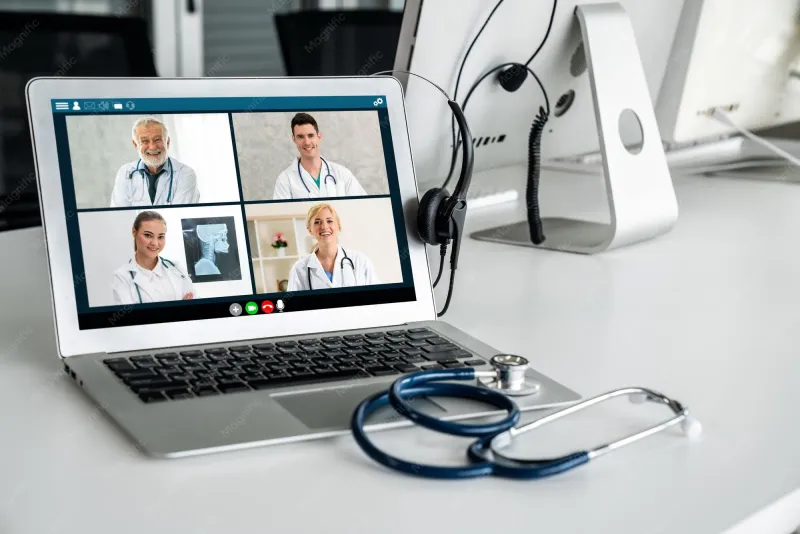
Photo: telemedicine video consultation patient wound care post surgery, via img.freepik.com
In the years since telehealth became a mainstream component of American healthcare delivery, its advantages have been well documented: reduced travel burden, improved access for patients in rural or underserved areas, lower per-visit cost, and greater scheduling flexibility. For many clinical interactions—medication management, mental health counseling, chronic disease follow-up—the virtual format is not merely acceptable but genuinely appropriate.
For patients navigating the period immediately before and after a surgical or invasive procedure, however, the virtual format carries a set of limitations that have received comparatively little attention. These limitations are not incidental to telemedicine. They are structural. They arise directly from the absence of physical presence, and they intersect with some of the most consequential dimensions of patient safety: sterility assessment, wound evaluation, and facility environment oversight.
The Pre-Operative Assessment: What a Video Call Cannot Accomplish
The pre-operative assessment serves a dual purpose. It evaluates the patient's fitness for the planned procedure and establishes a baseline against which post-operative recovery will be measured. In a traditional in-person setting, this assessment includes a physical examination that encompasses skin condition, circulatory status, and the identification of existing wounds, skin infections, or colonization risks—factors that directly affect a patient's vulnerability to post-surgical infection.
A video-based pre-operative consultation can gather a patient's medical history, review medications, and conduct a limited visual assessment. What it cannot reliably accomplish is the tactile and proximal evaluation that identifies subtle but clinically significant findings. A small area of cellulitis on the lower leg. A healing wound with early signs of colonization. Skin fragility that would affect how sterile draping adheres. These are findings that a clinician's hands and trained proximity detect far more reliably than a consumer-grade camera in variable lighting.
Beyond the individual patient, the pre-operative assessment in a traditional setting also allows the clinical team to evaluate the environment in which the patient has been living. Patients who will be returning home to environments with limited sanitation resources, or who will be caring for their own wounds without adequate support, represent elevated infection risk profiles that a virtual encounter may fail to fully surface. A patient who describes their home environment as "fine" may be doing so honestly, without recognizing what "fine" means in the context of post-surgical wound care.
Post-Operative Monitoring: The Limits of Remote Wound Surveillance
The post-operative period is the interval during which surgical site infections most commonly declare themselves. The CDC defines surgical site infections (SSIs) across three classifications—superficial incisional, deep incisional, and organ/space—with different presentation timelines and severity profiles. Early identification of SSI signs depends on consistent, skilled wound assessment.
Telemedicine platforms have made genuine progress in supporting remote wound monitoring. Patients can photograph wounds and transmit images to clinical teams. Some platforms use structured questionnaires to capture symptom data systematically. In low-complexity, low-risk post-operative scenarios, these tools provide meaningful surveillance coverage.
But the limitations are real and consequential. Photographic wound assessment is dependent on image quality, lighting, and patient positioning—variables that are rarely standardized in home settings. A wound that appears to be healing normally in a poorly lit photograph may, on direct examination, reveal erythema, induration, or early dehiscence that changes the clinical picture entirely. Odor—one of the clinically significant indicators of wound infection—is entirely absent from the remote encounter. Temperature assessment of the wound margin, which helps distinguish normal healing inflammation from pathological infection, requires physical contact.
For patients who have undergone procedures involving implantable devices, deep tissue repairs, or complex reconstructions, these gaps are particularly significant. The infections most dangerous in these populations are also among the most subtle in their early presentations. The window during which intervention is most effective is the same window during which remote monitoring is least reliable.
Facility Evaluation: The Problem of Virtual Site Assessment
A less-discussed but equally important dimension of telemedicine's sterility blind spot involves the evaluation of the facilities where procedures will be performed. In a traditional care pathway, referral to a surgical or procedural facility involves a degree of institutional familiarity—the referring provider has visited the facility, knows its staff, and has a basis for assessing its quality standards. That familiarity is not infallible, but it provides a layer of oversight.
As telemedicine expands, particularly in markets where patients may be consulting with providers located in different states or regions, that institutional familiarity is increasingly absent. A patient who receives a referral for a procedure from a virtual consultation may have no practical basis for evaluating the sterility standards of the facility to which they are being sent. The referring provider, operating remotely, may have no direct knowledge of that facility's inspection history, infection rates, or instrument reprocessing practices.
This dynamic is especially pronounced in the growing market for elective and minimally invasive procedures, where patients may actively seek lower-cost options and where the virtual consultation model is particularly prevalent. A telemedicine platform that connects patients with procedural facilities based on geographic proximity or insurance network participation may be providing genuine access to care—while simultaneously bypassing the informal quality evaluation that in-person referral relationships historically provided.
Bridging the Gap: Practical Strategies for Patients
The appropriate response to telemedicine's sterility blind spots is not to avoid virtual care. It is to use virtual care with a clear-eyed understanding of its scope and to supplement it deliberately where it falls short.
Request an in-person component for pre-operative assessment. Even if the majority of pre-operative consultation occurs virtually, patients undergoing any invasive procedure should advocate for at least one in-person clinical encounter prior to surgery. This allows for physical examination and creates an opportunity for the clinical team to assess environmental and systemic factors that affect infection risk.
Do not rely exclusively on virtual post-operative follow-up for complex procedures. For straightforward procedures with limited infection risk, remote monitoring may be entirely appropriate. For procedures involving implants, deep tissue work, or patients with elevated infection risk profiles (including those with diabetes, immunosuppression, or obesity), in-person wound assessment at defined intervals should be considered standard of care, not optional.
Independently research the facilities to which you are referred. Whether your referral comes from a virtual or in-person provider, the responsibility for evaluating the procedural facility's quality standards ultimately rests with the patient. Review state inspection records where available. Ask the facility directly about its surgical site infection rates and its accreditation status. Ask when it was last surveyed.
Communicate environmental factors proactively. If your home environment presents challenges for post-operative wound care—limited space, other household members with infections, inadequate access to wound care supplies—communicate this explicitly during your virtual pre-operative consultation. These factors affect your risk profile and should inform your care plan.
A Note on the Evolving Regulatory Landscape
U.S. regulatory frameworks governing telemedicine have expanded considerably since the COVID-19 public health emergency relaxed interstate licensure and prescribing restrictions. The permanent regulatory architecture for telehealth—including standards for what clinical assessments may appropriately occur virtually versus in person—remains a work in progress.
The Centers for Medicare & Medicaid Services (CMS) and various state medical boards are actively developing guidance in this space. Patients and providers alike should anticipate continued evolution in what telemedicine is authorized to do—and in what it is required to acknowledge it cannot.
At SteriPuram, our commitment to precision care and sterile standards extends to every point in the patient journey, including the virtual touchpoints that increasingly shape how patients arrive at and recover from procedures. Honest assessment of what those touchpoints can and cannot accomplish is not a critique of telemedicine. It is a prerequisite for using it safely.