Pipes, Pathogens, and the Perioperative Patient: The Hospital Water Crisis No One Is Talking About
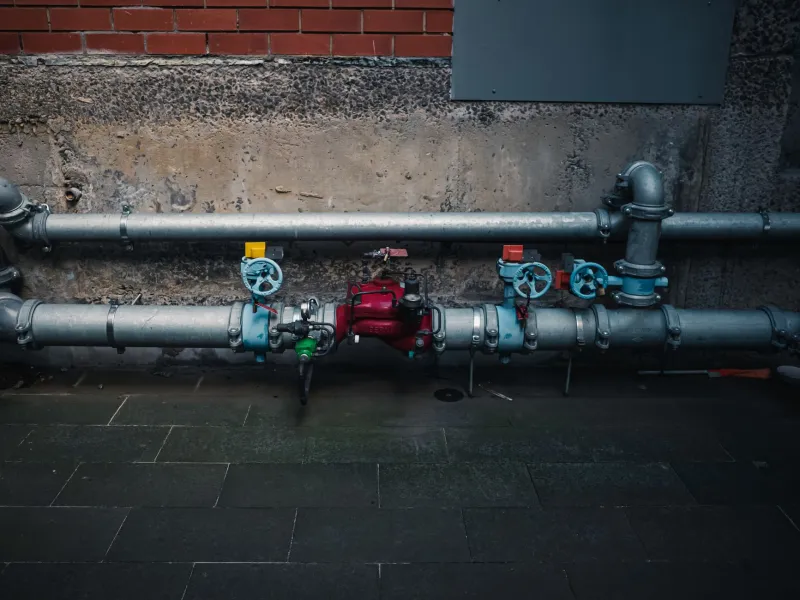
American hospitals project an image of controlled cleanliness — autoclaved instruments, laminar airflow systems, rigidly enforced hand hygiene protocols. Yet running silently beneath those polished floors and behind those antiseptic-scrubbed walls is an infrastructure that receives far less scrutiny than the surgical instruments it coexists with: the building's water system. And in far too many facilities, that system is quietly working against every sterility standard the clinical staff strives to uphold.
Waterborne pathogens do not announce themselves. They colonize slowly, thrive in neglected corners of plumbing networks, and travel through the air, through aerosols, and across contaminated hands to reach the most vulnerable patients in a facility — those whose bodies have been opened for surgical intervention.
The Biology of the Problem: Why Hospital Water Is Different
Not all water carries equal risk. Municipal tap water, while regulated under the Safe Drinking Water Act, is treated to a standard appropriate for healthy individuals consuming it orally. It is not designed to meet the sterility requirements of an environment where open wounds, implanted devices, and immunocompromised patients coexist under one roof.
The organisms of greatest concern in hospital water systems include Legionella pneumophila, Pseudomonas aeruginosa, Stenotrophomonas maltophilia, and nontuberculous mycobacteria (NTM). These microorganisms share a remarkable ability to form biofilm — a structured community of bacteria encased in a self-produced matrix that adheres to the interior surfaces of pipes, faucet aerators, showerheads, ice machines, and water storage tanks.
Biofilm is not merely a collection of bacteria. It is, in effect, a protective fortress. Organisms embedded within it demonstrate resistance to standard disinfection concentrations of chlorine, survive wide temperature fluctuations, and continuously shed planktonic cells into the water column — cells that flow freely from fixtures throughout the building, including those in or adjacent to surgical and procedural areas.
The problem is compounded by the physical characteristics of large hospital buildings. Complex plumbing configurations create low-flow or no-flow zones — sections of pipe where water sits stagnant for extended periods. These dead legs, as they are known in facilities engineering, are ideal incubation environments. Water sitting at temperatures between 77°F and 108°F (25°C–42°C) in such zones provides precisely the thermal conditions under which Legionella replicates most aggressively.
From Sink to Sterile Field: The Transmission Pathways
The journey from a contaminated hospital sink to a surgical patient's wound is shorter than most clinicians or administrators would prefer to acknowledge.
Handwashing sinks in perioperative areas represent one of the most direct transmission risks. A 2018 investigation published in Infection Control & Hospital Epidemiology documented how sink drains in intensive care units became reservoirs for carbapenem-resistant organisms that were subsequently transferred to patients through the hands of healthcare workers who had contact with contaminated splash zones. The proximity of scrub sinks to sterile preparation areas creates an analogous hazard in surgical settings.
Aerosol generation is a second mechanism. Faucets and showerheads running at high pressure disperse fine water droplets that can remain suspended in air for minutes. In facilities where surgical prep rooms, instrument processing areas, or sterile supply storage are not adequately isolated from general plumbing fixtures, airborne contamination becomes a measurable risk.
Ice machines, frequently overlooked in infection control assessments, have been implicated in multiple outbreak investigations. Ice produced from contaminated water — or from machines with biofilm-colonized internal components — has been linked to surgical site infections when used in patient care or inadvertently introduced into clinical areas.
Outbreak Case Studies: When the Evidence Becomes Undeniable
The consequences of inadequate hospital water management are not theoretical. They have materialized, repeatedly, in documented outbreaks across the United States.
In 2019, the Centers for Disease Control and Prevention (CDC) investigated a cluster of Legionella infections at a large academic medical center in the Midwest. Environmental sampling revealed colonization throughout the facility's hot water distribution system, including in areas adjacent to surgical suites. Several affected patients had been admitted for elective procedures and had no community exposure to the organism prior to hospitalization.
A separate investigation at a veterans' affairs medical facility identified NTM contamination in heater-cooler units used during cardiac surgery — devices that circulate water internally and, when inadequately maintained, can aerosolize mycobacteria directly into the operating room environment. The FDA issued multiple safety communications regarding this specific vector between 2015 and 2016, yet follow-up surveillance data suggested that compliance with recommended corrective measures remained inconsistent across facilities.
Pseudomonas outbreaks linked to hospital plumbing have been documented in neonatal intensive care units, burn centers, and oncology wards — patient populations with surgical exposure and severely compromised immune defenses. In each instance, environmental investigation revealed the same underlying failure: a water management program that was either absent, incomplete, or inadequately enforced.
The Regulatory Gap: Who Is Actually Responsible?
Federal oversight of hospital water quality is, at best, fragmented. The Environmental Protection Agency (EPA) regulates water at the point of entry into a building. What happens within the building's own plumbing network falls largely outside EPA jurisdiction. The CDC has published guidance — most notably its 2017 Guidelines for Environmental Infection Control in Health-Care Facilities and the subsequent Toolkit for Developing a Water Management Program — but these documents carry no regulatory force. Compliance is voluntary.
The Joint Commission, which accredits the majority of U.S. hospitals, issued a sentinel event alert in 2020 specifically addressing waterborne disease risks and urged accredited facilities to implement formal water management programs based on ASHRAE Standard 188. However, accreditation surveys do not always include rigorous assessment of water management program implementation, and deficiencies in this domain have historically attracted less enforcement attention than more visible infection control failures.
State health departments vary considerably in their requirements. Some mandate water management plans for licensed healthcare facilities; others do not. This patchwork regulatory environment means that a patient undergoing surgery in one state may receive care in a facility with a robust, regularly tested water safety program, while a patient in a neighboring state receives care in a facility where no such program exists.
What Patients and Advocates Can — and Should — Demand
For patients preparing for surgical procedures, the hospital's water infrastructure is rarely a consideration. It should be. While no patient should be expected to audit a facility's plumbing schematics, there are reasonable questions and advocacy positions that can shift institutional behavior.
Patients and their representatives may ask a facility's patient safety officer or infection control team whether the institution maintains a formal water management plan compliant with ASHRAE 188. They may inquire whether the facility conducts routine environmental sampling for Legionella and other waterborne pathogens, and whether results are available. Advocacy organizations and state health departments can be engaged to support mandatory water management program requirements for licensed acute care facilities.
On the institutional side, the operational imperatives are well established even if adoption remains uneven. Facilities should implement systematic water temperature monitoring, regular flushing of low-use outlets, scheduled replacement of faucet aerators and showerhead components, and point-of-use water filtration in areas where immunocompromised or surgical patients are cared for. These are not novel interventions — they are established best practices that have been proven effective in reducing waterborne pathogen burden when implemented consistently.
Precision Care Requires Precision Infrastructure
At SteriPuram, our editorial commitment is rooted in the belief that sterile standards must extend beyond the surgical tray and the processing department. They must encompass every environmental variable that touches a patient's care — including the water flowing silently through the walls of the facility entrusted with that patient's safety.
The surgical suite can be immaculate. The instruments can be perfectly processed. The team can execute flawlessly. And yet, if the infrastructure supporting that environment harbors organisms that no one is monitoring, the sterility achieved at such great effort can be undermined in an instant.
Hospital water is not a peripheral concern. It is a foundational one. Until regulatory frameworks, accreditation standards, and institutional culture treat it with the same rigor applied to instrument sterilization and hand hygiene, the gap between the care patients deserve and the care they receive will remain — flowing quietly, invisibly, through every pipe in the building.