The Forgotten Fluid: How Contaminated Surgical Irrigation Solutions Are Quietly Endangering American Patients
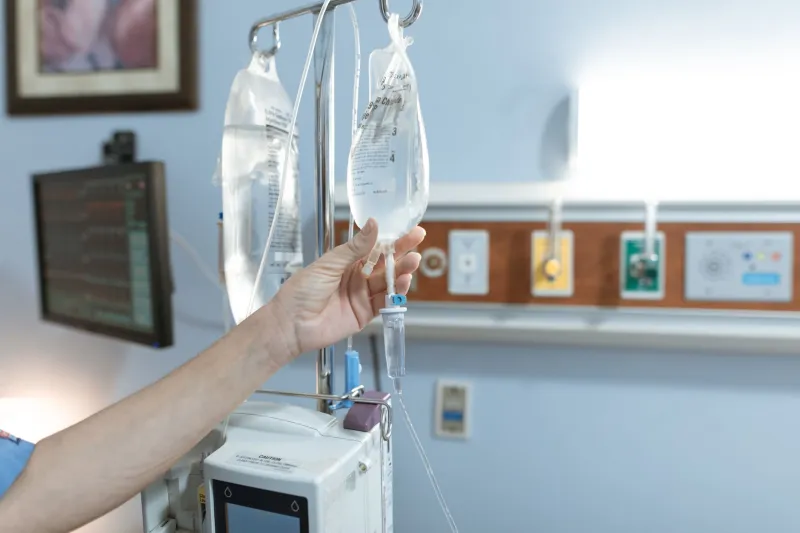
When most Americans think about surgical safety, their minds go to scalpels, gloves, and drapes — the visible, tangible tools of the operating room. What rarely enters the conversation is the fluid. During countless surgical procedures performed every day across the United States, sterile irrigation solutions are flushed directly into open wounds, joint spaces, abdominal cavities, and surgical fields. These fluids cleanse tissue, maintain visibility, prevent desiccation, and regulate temperature. They are, in a very real sense, in direct and prolonged contact with a patient's most vulnerable internal anatomy.
And yet, the sterility of surgical irrigation fluid is one of the least scrutinized elements of operating room safety — by hospitals, by patients, and in many cases, by regulatory oversight bodies.
What Surgical Irrigation Fluid Actually Does
Surgical irrigation is not a minor procedural detail. In orthopedic surgeries, large volumes of saline solution are used to flush bone fragments and debris from joint spaces. In laparoscopic and open abdominal procedures, irrigation helps clear blood and maintain a clean operative field. Neurosurgical and urological procedures rely on specialized irrigation fluids to manage pressure, temperature, and tissue integrity throughout the operation.
The volumes involved are substantial. A single orthopedic procedure may use several liters of irrigation fluid. A urological resection can require significantly more. This is not a brief rinse — it is an extended, high-volume exposure of internal tissue to an external solution.
Given this reality, the assumption that surgical irrigation fluid is uniformly sterile and safely handled from manufacture to patient contact deserves serious examination.
Where Sterility Breaks Down: The Journey from Manufacturer to Operating Room
Surgical irrigation fluids — most commonly normal saline (0.9% sodium chloride), lactated Ringer's solution, or glycine-based solutions — are manufactured under strict pharmaceutical-grade sterile conditions and arrive at hospitals sealed and certified sterile. On paper, the starting point is sound.
The problem is what happens next.
Warming practices and bacterial proliferation. Many irrigation fluids are warmed prior to use to prevent hypothermia in patients and to improve surgical comfort. Hospitals frequently warm IV bags in dry-heat cabinets or fluid warming units — a clinically appropriate practice. However, the duration of warming matters enormously. Bags left in warming units for extended periods, particularly beyond manufacturer-recommended timeframes, can experience conditions that compromise sterility. Some facilities lack clear protocols governing how long warmed irrigation bags may remain in use before being discarded. When tracking systems are absent or inconsistently applied, bags that have been warming for hours or even days may reach the surgical field.
Spike and hang contamination. The moment a sealed irrigation bag is accessed — spiked with IV tubing or a delivery set — sterility becomes dependent on technique. Improper spiking, failure to disinfect access ports, or the use of non-sterile tubing components creates an immediate contamination vector. In a busy operating room, where efficiency pressures are real and constant, these steps can be rushed.
Pooling and reuse within a procedure. In some surgical settings, irrigation fluid that has been poured into a basin or bowl may be reused within the same procedure rather than discarded after a single use. Once fluid enters an open container, it is exposed to the ambient environment of the operating room and is no longer considered sterile by strict standards. Nevertheless, practices vary widely across institutions.
Outbreaks and documented harm. Contaminated surgical irrigation fluid is not a theoretical risk. The Centers for Disease Control and Prevention (CDC) and peer-reviewed literature have documented outbreak investigations linking contaminated irrigation solutions to postoperative infections caused by organisms including Pseudomonas aeruginosa, Burkholderia cepacia, and nontuberculous mycobacteria. In several reported cases, the contamination source was traced not to the manufacturer but to in-hospital handling — warming units, water baths, or improper storage environments.
The Regulatory Landscape: Comprehensive in Theory, Variable in Practice
The U.S. Food and Drug Administration (FDA) classifies large-volume irrigation solutions as drug products and regulates their manufacture accordingly. Manufacturers must adhere to Current Good Manufacturing Practice (CGMP) standards, and products must pass sterility and endotoxin testing before release.
What the FDA does not — and structurally cannot — regulate is every in-hospital handling decision made after the product leaves the manufacturer's dock. That responsibility falls to individual hospitals, guided by standards from organizations such as The Joint Commission, the Association of periOperative Registered Nurses (AORN), and the Association for the Advancement of Medical Instrumentation (AAMI).
AORN, in particular, publishes evidence-based guidelines addressing irrigation fluid warming, labeling of opened solutions, and time limits for warmed bags. These guidelines are detailed and clinically grounded. The challenge is that adherence is neither universally mandated nor uniformly verified. A hospital may be fully accredited and still operate with inconsistent warming protocols, inadequate labeling of time-stamped bags, or staff who have not received updated training on irrigation fluid handling.
What Patients Are Not Told — and What They Should Ask
Patients preparing for surgery are routinely counseled on fasting requirements, medication adjustments, and what to expect during recovery. They are almost never informed about how the fluids that will be introduced directly into their bodies are managed, stored, or warmed.
This is an information gap that patients have every right to close.
Before any procedure involving surgical irrigation — which includes most orthopedic, urological, laparoscopic, and many general surgical procedures — patients should feel empowered to ask direct questions of their surgical team or the facility's nursing leadership:
- Does this facility follow AORN guidelines for irrigation fluid warming? Ask specifically whether the hospital uses dry-heat warming cabinets (the preferred method) rather than water baths, which carry their own contamination risks.
- What is your protocol for labeling and time-limiting warmed irrigation bags? A facility with a strong safety culture will have a clear, written policy and will be able to describe it.
- How are opened irrigation solutions tracked and discarded during a procedure? Specifically, ask whether partially used bags or basins of fluid are ever replenished or reused.
- Has this facility had any infection events linked to irrigation fluid? While hospitals are not legally required to disclose this information voluntarily, asking the question signals that you are an informed patient and may prompt a more transparent conversation.
- Is your sterile processing department involved in auditing irrigation fluid handling? In facilities where sterile processing professionals have oversight extending beyond instruments to all sterile products in the OR, standards tend to be more consistently applied.
Raising the Standard: What a High-Quality Facility Should Look Like
The benchmark for surgical irrigation fluid safety is not difficult to define — it is simply not universally practiced. Facilities committed to genuine sterility standards will maintain temperature-controlled, time-tracked warming systems with clear discard protocols. They will train perioperative staff on proper spiking technique and enforce sterile field discipline around irrigation basins. They will audit these practices with the same rigor applied to instrument sterilization.
Patients deserve to receive care in facilities where the fluid introduced into their bodies during surgery receives the same meticulous attention as every other element of the sterile surgical environment. That standard exists. The question each patient must ask — before consenting, before going under anesthesia — is whether the facility before them is actually meeting it.
At SteriPuram, we believe that precision care extends to every element of the surgical encounter, including what cannot be easily seen. The fluid in the field matters. So does your right to know how it got there.