Breathing Safe: What the Air Inside Your Operating Room Reveals About Your Surgical Risk
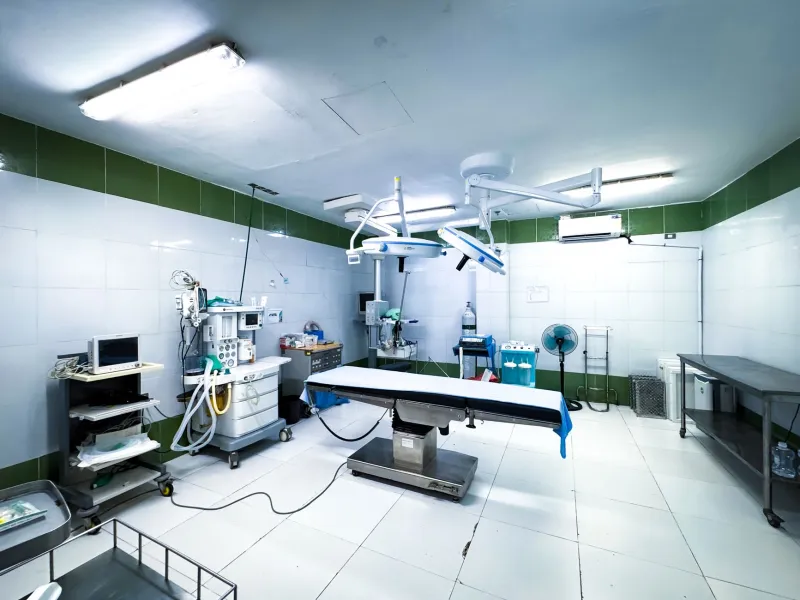
When patients prepare for surgery, their attention is naturally drawn to the visible: the sterile drapes, the gloved hands of the surgical team, the gleaming instruments laid out in precise order. What almost no one considers is the invisible medium surrounding every incision, every implant, and every exposed tissue — the air itself.
Operating room air is not ordinary air. Or at least, it shouldn't be. In a properly maintained surgical facility, the atmosphere above the table is the product of sophisticated engineering, rigorous maintenance schedules, and multilayered redundancy. When those systems function as designed, airborne pathogens are filtered, diluted, and rendered largely harmless before they ever reach a patient's open wound. When they don't, the consequences can be devastating.
Understanding how surgical air quality works — and what patients can reasonably ask about it — is one of the more underappreciated dimensions of informed medical decision-making.
Why Operating Room Air Is a Distinct Infection Risk
Surgical site infections (SSIs) remain one of the most common and costly complications in American healthcare. The Centers for Disease Control and Prevention estimates that SSIs affect hundreds of thousands of patients annually, contributing to prolonged hospital stays, additional procedures, and significant mortality risk. While contaminated instruments and lapses in hand hygiene account for a portion of these cases, airborne contamination represents a meaningful and frequently underestimated pathway.
The human body sheds skin cells — known as squames — at a rate of roughly 30,000 to 40,000 particles per hour. Each of those particles can carry bacteria. In a standard room with multiple surgical team members, the ambient microbial load would quickly become unacceptable without active air management. Add to that the particles generated by surgical equipment, cauterization smoke, and the simple act of speaking, and the need for a controlled atmospheric environment becomes immediately apparent.
HEPA Filtration: The Foundation of Surgical Air Quality
High-Efficiency Particulate Air (HEPA) filtration is the baseline standard for operating rooms across the United States. These filters are engineered to capture at least 99.97 percent of airborne particles measuring 0.3 microns or larger — a threshold that encompasses the vast majority of bacteria and many fungal spores.
In a properly designed surgical suite, air passes through HEPA filters before entering the room and is exchanged at a rate of 15 to 25 times per hour, depending on facility guidelines and room classification. This constant cycling prevents the accumulation of contaminants and maintains what engineers call a "clean air envelope" around the surgical field.
However, HEPA filtration alone is not sufficient. The filters must be inspected, tested, and replaced on a schedule that accounts for actual use and environmental conditions. A filter that has exceeded its service life or developed a bypass leak offers a false sense of security — one that may not be detected until an infection cluster prompts a formal investigation.
Laminar Airflow: Directing the Invisible
Beyond filtration, many advanced surgical centers employ laminar airflow systems, which deliver a continuous, unidirectional stream of HEPA-filtered air directly downward over the operative field. Unlike conventional turbulent airflow, which can carry particles in unpredictable directions, laminar systems create a curtain of clean air that physically displaces contaminated room air away from the patient.
Research on laminar airflow's effectiveness has produced nuanced findings. In orthopedic and cardiovascular procedures — where implant infections carry catastrophic consequences — laminar systems are widely regarded as a meaningful protective measure. For other procedure types, the evidence is more mixed, and some studies have raised questions about whether improperly configured systems might actually redirect particles toward the wound rather than away from it.
This underscores a critical point: the technology itself is only as effective as its installation, calibration, and ongoing validation. A laminar airflow system that has not been properly balanced or tested may perform worse than a well-maintained conventional system.
Positive Pressure Environments: Keeping Contamination Out
Operating rooms in the United States are required by the American Institute of Architects and Joint Commission standards to maintain positive air pressure relative to adjacent corridors and spaces. This means air flows outward when a door is opened, rather than drawing potentially contaminated hallway air inward.
Maintaining positive pressure requires that the room's HVAC system consistently deliver more air than it exhausts. When doors are propped open — a common but problematic practice in busy surgical suites — or when HVAC systems are out of balance, that pressure differential collapses. The protective barrier disappears, and the operating room becomes vulnerable to infiltration from surrounding areas.
Pressure monitoring in surgical suites should be continuous and logged. Facilities that cannot demonstrate consistent pressure maintenance records are operating with a significant blind spot in their infection control infrastructure.
UV-C Air Purification: The Emerging Standard
Ultraviolet-C (UV-C) light technology has moved from theoretical promise to practical deployment in a growing number of leading U.S. surgical centers over the past several years. UV-C radiation at wavelengths between 200 and 280 nanometers disrupts the DNA of microorganisms, rendering them unable to replicate — effectively neutralizing pathogens that filtration systems might miss.
In-duct UV-C systems can treat air continuously as it cycles through the HVAC infrastructure, adding a germicidal layer that complements rather than replaces HEPA filtration. Upper-room UV-C fixtures, positioned above occupied zones, can disinfect air near the ceiling before it recirculates. More recently, far-UVC technology — operating at approximately 222 nanometers — has attracted research interest because it appears to inactivate airborne pathogens without posing the tissue damage risks associated with conventional UV-C wavelengths, potentially allowing continuous use even in occupied spaces.
For patients undergoing procedures at facilities that have invested in UV-C augmentation, this represents a meaningful additional layer of protection. It is a reasonable question to raise with a surgical facility before scheduling an elective procedure.
What Happens When These Systems Fail
Air management failures in surgical environments rarely announce themselves. They manifest weeks later, in the form of wound infections, unexpected fevers, or positive cultures for environmental organisms that have no business being in a surgical site. Mold species such as Aspergillus, which can enter through compromised filtration or construction disturbances, have been responsible for serious and sometimes fatal infections in immunocompromised surgical patients.
Facilities undergoing renovation work face heightened risk, as construction activities generate enormous quantities of fungal spores. Best practice calls for physical isolation of construction zones, enhanced air monitoring, and in some cases, temporary relocation of high-risk procedures. When these precautions are not taken, the consequences can extend to patients who had no reason to suspect that their operating environment had been compromised.
Questions Worth Asking Before Your Procedure
Patients scheduled for elective surgery have both the right and the practical ability to inquire about air quality management at their chosen facility. Reasonable questions include whether the operating rooms are equipped with HEPA filtration and what the maintenance and certification schedule looks like, whether laminar airflow is used for implant procedures, how positive pressure compliance is monitored, and whether the facility employs any UV-C augmentation technology.
A facility confident in its standards will answer these questions without hesitation. Evasiveness or an inability to provide documentation should be treated as meaningful information.
Sterile Standards Extend Above the Table
At SteriPuram, the commitment to precision care extends to every dimension of the surgical environment — including the atmosphere that surrounds it. Sterility is not merely a property of instruments and surfaces. It is a condition that must be actively maintained in three dimensions, continuously, from the moment a patient enters the operative suite until the final closure.
The air you breathe during surgery is not incidental. It is a clinical variable, and like every other clinical variable, it deserves scrutiny, maintenance, and accountability. Patients who understand this are better positioned to choose facilities that treat it accordingly.