When Steam Is No Longer Enough: How Sterilization-Resistant Pathogens Are Forcing U.S. Hospitals to Rethink Everything
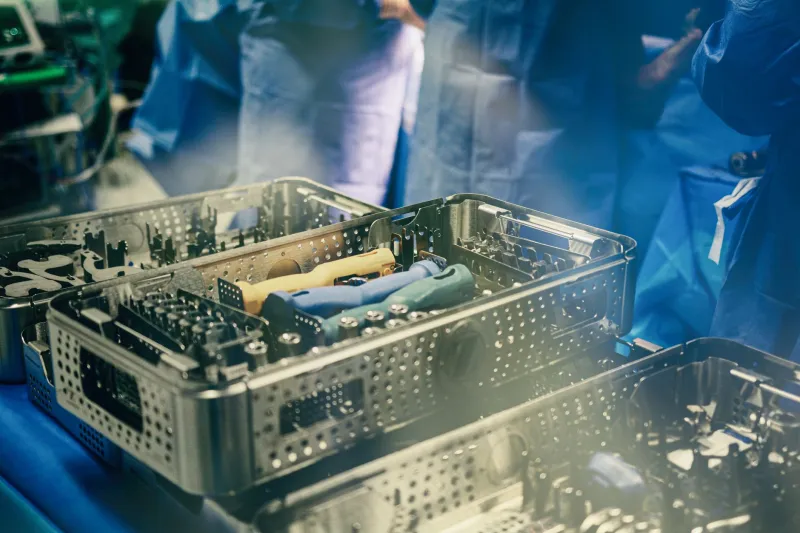
For more than a century, the autoclave has stood as the cornerstone of surgical sterilization — a near-infallible weapon against microbial contamination. But a new generation of hardy, drug-resistant pathogens is exposing the limits of steam sterilization, compelling hospitals and surgical centers across the United States to confront an uncomfortable truth: the tools they trust most may not always be enough.
The implications are profound. Surgical facilities that have operated under the assumption that proper autoclave cycles guarantee a sterile field are now being asked to examine that assumption with fresh scrutiny — and in some cases, to replace it entirely.
The Autoclave's Achilles' Heel
Steam sterilization works by exposing instruments and materials to pressurized steam at temperatures typically ranging from 250°F to 273°F (121°C to 134°C) for a prescribed duration. Under these conditions, the vast majority of bacteria, viruses, and fungi are destroyed. The process has an impressive track record — but it is not unconditional.
Certain microorganisms possess biological mechanisms that make them extraordinarily resistant to thermal destruction. Chief among these are bacterial endospores — dormant, armor-like structures formed by organisms such as Clostridioides difficile (C. diff) and Bacillus anthracis. These spores can survive conditions that would obliterate most other life forms. While standard autoclave cycles are designed to eliminate them under ideal conditions, real-world variables — including instrument bioburden, improper loading of sterilization chambers, or equipment that has drifted out of calibration — can create gaps in efficacy that spores are uniquely positioned to exploit.
And then there is the matter of prions. These misfolded proteins, responsible for rare but devastating neurological conditions such as Creutzfeldt-Jakob disease, are not living organisms at all — meaning that no conventional sterilization method, including autoclaving, reliably destroys them. The Centers for Disease Control and Prevention (CDC) has issued specific guidance for facilities that may encounter prion-contaminated instruments, acknowledging that standard protocols are insufficient.
CRE and the Endoscope Crisis: A Case Study in Sterilization Failure
Perhaps no episode in recent American healthcare history illustrates the stakes more vividly than the outbreak of Carbapenem-resistant Enterobacteriaceae (CRE) linked to contaminated duodenoscopes — specialized endoscopes used in procedures such as endoscopic retrograde cholangiopancreatography (ERCP). Between 2012 and 2015, outbreaks at major U.S. medical centers, including UCLA Health and Virginia Mason Medical Center in Seattle, were traced to a design flaw in the scopes' elevator channel — a narrow, difficult-to-clean recess that harbored CRE even after standard reprocessing.
These were not facilities cutting corners. These were world-class academic medical centers following manufacturer instructions. Yet the geometry of the instrument itself created a microenvironment where cleaning and disinfection could not fully penetrate. CRE — already resistant to last-resort antibiotics — survived, and patients died.
The duodenoscope crisis forced the Food and Drug Administration (FDA) to mandate enhanced reprocessing protocols and, eventually, to push manufacturers toward single-use or disposable-component designs. It also delivered a broader lesson: sterilization efficacy is inseparable from instrument design, cleaning thoroughness, and the biological profile of the pathogens involved.
C. difficile and the Contact Transmission Problem
Clostridioides difficile presents a different but equally urgent challenge. C. diff is now the most common healthcare-associated infection in U.S. hospitals, responsible for approximately 500,000 infections and nearly 30,000 deaths annually, according to CDC estimates. Its spores are notoriously resistant not only to heat but also to many alcohol-based hand sanitizers and standard surface disinfectants.
For surgical environments, the concern is not merely the autoclave — it is the entire chain of environmental control. C. diff spores can persist on surfaces for months, survive routine cleaning protocols, and be transferred via contact with contaminated hands, equipment, or environmental surfaces. Surgical facilities that admit patients with active C. diff colonization must implement contact precautions, dedicated equipment, and sporicidal cleaning agents such as diluted sodium hypochlorite — measures that go well beyond the sterilization chamber.
The pathogen's resilience has prompted many facilities to reconsider room turnover protocols, gown-and-glove policies, and the frequency with which high-touch surfaces in perioperative areas are treated with sporicidal agents.
Next-Generation Sterilization: What Is Being Deployed
In response to these evolving threats, hospitals and surgical centers are increasingly supplementing or replacing traditional autoclave sterilization with technologies designed to address its limitations.
Hydrogen Peroxide Gas Plasma (HPGP): This low-temperature sterilization method is effective against a broad spectrum of pathogens, including many that challenge steam sterilization, and is particularly valuable for heat-sensitive instruments such as flexible endoscopes and minimally invasive surgical tools. Systems such as the STERRAD platform, manufactured by Advanced Sterilization Products, have become standard in many U.S. facilities.
Ethylene Oxide (EtO) Sterilization: Long used for complex or heat-sensitive devices, EtO remains effective against a wide range of resistant organisms. However, its use is declining in some settings due to environmental and occupational health concerns, and the EPA has moved to tighten regulations on EtO emissions from commercial sterilization facilities.
Peracetic Acid Systems: Liquid chemical sterilization using peracetic acid — delivered through systems such as the STERIS System 1E — offers rapid, low-temperature sterilization for heat-sensitive items and is highly effective against bacterial spores. It is increasingly used for endoscope reprocessing.
Single-Use Instrument Strategies: Driven in part by the duodenoscope crisis, a growing number of facilities are transitioning to single-use versions of high-risk instruments, eliminating reprocessing risk entirely. While cost remains a barrier, the calculus is shifting as the legal, regulatory, and human costs of reprocessing failures become better understood.
Enhanced Biological Monitoring: Beyond technology upgrades, leading facilities are intensifying their use of biological indicators — test systems containing live spores — to verify sterilization efficacy with every cycle, not just periodically. This shift from periodic to continuous monitoring represents a meaningful upgrade in quality assurance.
What Patients and Administrators Must Demand
The emergence of sterilization-resistant pathogens is not a reason for alarm — it is a reason for precision. Patients undergoing surgical procedures or invasive diagnostics have both the right and the responsibility to ask informed questions about the sterilization standards their facility upholds.
Patients should inquire whether their facility uses biological indicators to verify sterilization cycles and how frequently those results are reviewed. They should ask whether the facility has a written protocol for managing instruments used on patients with known or suspected C. diff colonization or prion disease. For procedures involving endoscopes, patients should ask directly whether the scope will be single-use or reprocessed, and if reprocessed, what enhanced reprocessing protocol is followed.
Healthcare administrators, for their part, must resist the temptation to treat sterilization technology as a fixed infrastructure investment. The microbial landscape is not static. Facilities that have not conducted a formal review of their sterilization and disinfection protocols within the past two years should consider that an urgent priority.
Regulatory bodies including the CDC, the Association for the Advancement of Medical Instrumentation (AAMI), and The Joint Commission provide regularly updated guidance on sterilization standards. Alignment with these frameworks — and documentation of that alignment — is not merely a compliance exercise. It is the foundation of patient safety in the sterile surgical environment.
Precision as the Only Acceptable Standard
The autoclave remains an indispensable tool. It will not be replaced — but it must be understood, validated, and supplemented with the rigor that today's microbial threats demand. The pathogens that challenge conventional sterilization do not respect institutional reputation or procedural habit. They exploit gaps, however small.
At SteriPuram, we hold to the principle that sterile standards are not a baseline to be met — they are a ceiling to be continuously raised. In an era when the microorganisms themselves are evolving, the only adequate response is a commitment to precision that evolves alongside them.