Reusable Surgical Drapes: What Hospitals Aren't Telling You About the Fabric Between You and Infection
Reusable Surgical Drapes: What Hospitals Aren't Telling You About the Fabric Between You and Infection
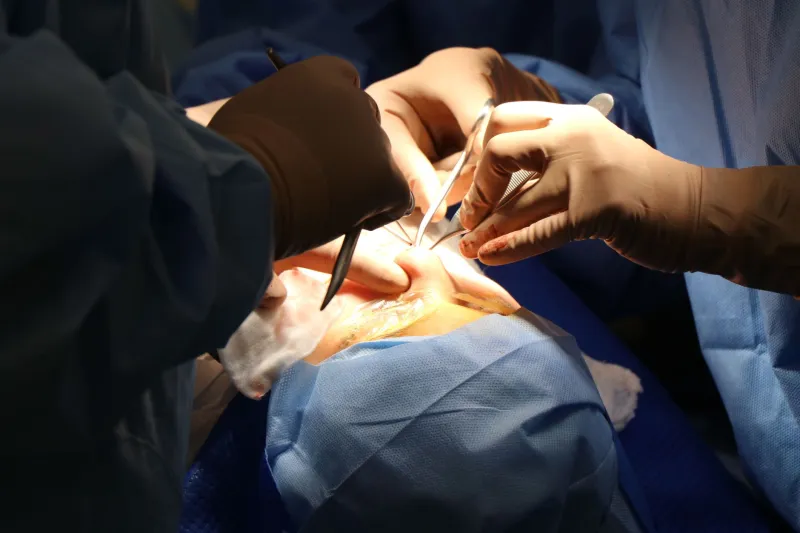
When you are wheeled into an operating room, your attention is understandably fixed on the procedure ahead. Few patients spare a thought for the draping materials arranged across their bodies and the surrounding surgical field. Yet those drapes — whether woven textile or single-use nonwoven — form one of the most consequential sterile barriers in the entire operating environment. And right now, a quiet but consequential cost-cutting trend is reshaping what lies beneath that barrier in hospitals across the country.
Facing relentless financial pressure, a growing number of U.S. health systems are abandoning single-use disposable surgical drapes in favor of reusable textile alternatives. The logic is straightforward: reusable drapes cost less per cycle over their lifespan and generate less medical waste. What the procurement spreadsheets rarely capture, however, is the complexity — and the fragility — of the laundering, inspection, and sterilization chain that must function flawlessly every single time for those drapes to be genuinely safe.
The Case for Disposables — and Why It Is Being Overruled by Finance Departments
Single-use surgical drapes, typically manufactured from nonwoven synthetic materials, arrive at the operating table in sealed, pre-sterilized packaging. Their sterility is verified at the point of manufacture, their barrier performance is standardized, and their journey ends in the waste bin after a single use. There is no laundering variable, no reprocessing error, and no gradual degradation of material integrity to account for.
Reusable textile drapes, by contrast, must earn their sterile status anew before every procedure. That process involves industrial laundering, meticulous inspection, precise folding, and either steam autoclave sterilization or another validated method — repeated across a drape's entire service life, which may span 75 or more wash-and-sterilize cycles depending on the manufacturer's specifications.
When every step in that cycle is executed correctly, reusable drapes can meet the barrier performance standards set by the Association for the Advancement of Medical Instrumentation (AAMI). The operative phrase is when every step is executed correctly.
Where the Reprocessing Chain Breaks Down
The AAMI's standards — specifically ANSI/AAMI PB70, which governs liquid barrier performance for protective apparel and drapes in health care facilities — establish minimum thresholds for how well a drape resists fluid penetration. What those standards cannot guarantee is consistent real-world compliance across thousands of individual reprocessing cycles in dozens of different laundry facilities.
Several well-documented failure points deserve attention.
Fabric degradation over repeated laundering. Textile drapes lose barrier integrity gradually and invisibly. A drape that passed inspection on cycle 40 may have developed microscopic fiber breaks by cycle 65 that no visual check will detect. Some facilities rely on cycle-count tracking systems to retire drapes at the manufacturer's recommended limit; others do not.
Inconsistent inspection protocols. Before refolding and sterilization, each drape is supposed to be held up to a light source and inspected for pinholes, thin spots, tears, and staining. In high-volume laundry operations processing hundreds of drapes per shift, the thoroughness of that inspection is subject to human fatigue, staffing shortages, and time pressure — none of which appear on a compliance checklist.
Laundry facility oversight gaps. Many hospitals outsource textile reprocessing to commercial healthcare laundries. The quality of those facilities varies. While the Healthcare Laundry Accreditation Council (HLAC) offers voluntary accreditation, participation is not universal, and accreditation does not eliminate the possibility of process lapses between audits.
Sterilization packaging failures. A perfectly laundered drape that is folded incorrectly, wrapped in compromised packaging material, or stored improperly after sterilization can lose its sterile status before it ever reaches the operating room. The sterility of a reusable drape is only as reliable as the weakest link in a long reprocessing chain.
What the Research Suggests
The academic literature on surgical site infections (SSIs) and drape type is not conclusive in either direction — a point that advocates for reusable drapes are quick to cite. Several studies have found no statistically significant difference in SSI rates between facilities using disposable versus properly reprocessed reusable drapes. Critics of those studies, however, point to the difficulty of isolating drape type as an independent variable in complex surgical environments, and to the fact that most studies examine facilities with robust reprocessing programs rather than average real-world conditions.
What is less contested is this: when reprocessing standards are not rigorously maintained, reusable drapes present a measurable infection risk. A 2010 study published in the American Journal of Infection Control found that reusable drapes with compromised barrier performance allowed significantly greater bacterial passage than intact single-use alternatives. The question is not whether reusable drapes can be safe. It is whether they are safe in the specific facility where your procedure will take place.
Your Right to Know — and the Questions Worth Asking
Patients in the United States have a legitimate interest in understanding the sterility standards of any facility where they will undergo surgery. That interest extends to the materials used in the surgical field. Here are concrete steps you can take before consenting to a procedure.
Ask your surgeon directly. Inquire whether the facility uses single-use or reusable surgical drapes and gowns. A surgeon who values patient transparency will either know the answer or find out.
Contact the facility's infection control or sterile processing department. Ask whether the hospital reprocesses drapes in-house or through an outside laundry, and whether that laundry holds HLAC accreditation.
Request information on the facility's SSI rates. The Centers for Medicare & Medicaid Services (CMS) publishes some hospital-acquired infection data through its Hospital Compare tool. While SSI data specific to drape type is not broken out, overall infection rates provide useful context.
Ask about AAMI PB70 compliance. A facility that can readily confirm its reusable drapes are tested and managed in accordance with AAMI PB70 standards is demonstrating a baseline level of programmatic seriousness. Hesitation or unfamiliarity with the standard is itself informative.
Inquire about cycle-count tracking. Ask whether the facility uses a system to track how many times each drape has been laundered and sterilized, and what the retirement threshold is.
The Broader Principle at Stake
The shift toward reusable surgical drapes is not inherently wrong. Sustainability goals are legitimate, and a well-managed reprocessing program can deliver safe, cost-effective outcomes. The problem arises when the decision to switch is driven purely by procurement savings without a corresponding investment in the reprocessing infrastructure, oversight, and staff training that safe reuse demands.
At a facility committed to sterile standards, every material that enters the operating field — whether it comes from a sealed disposable package or a freshly sterilized textile — has earned its place through a verifiable, documented process. Patients deserve to know which standard their facility upholds, and they have every right to ask before they are in a position where asking is no longer possible.
Precision care begins with informed patients. The fabric covering your surgical field is not a trivial detail. It is part of the sterile environment that stands between you and a preventable infection — and that makes it worth every question you choose to ask.