Labeled Once, Used Twice: The Regulated but Rarely Disclosed Practice of Single-Use Device Reprocessing in U.S. Hospitals
When you arrive at a hospital or ambulatory surgical center for a procedure, you likely assume that every instrument, catheter, or electrosurgical tool introduced into your body is brand new — used once, then discarded. The label on many of those devices reinforces that assumption. It reads, plainly and prominently: Single-Use Only.
What that label does not tell you is that in thousands of American hospitals, those very devices may have already been used on another patient. They have been collected, cleaned, sterilized, retested, and repackaged by a third-party reprocessor — all with the explicit authorization of the U.S. Food and Drug Administration.
This is not a black market operation. It is a regulated, multibillion-dollar industry. And most patients have no idea it exists.
What Is Single-Use Device Reprocessing?
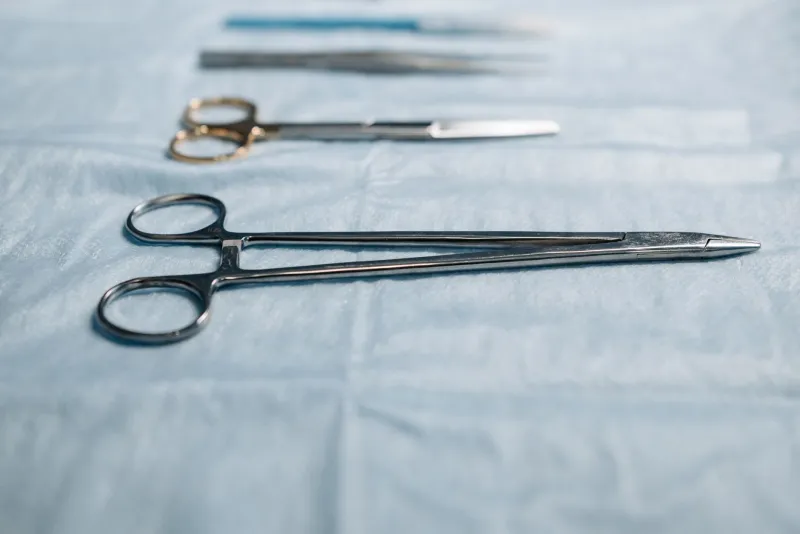
Single-use devices (SUDs) are medical instruments or components that original equipment manufacturers (OEMs) design and label for one-time use. The category is broad: it includes electrosurgical pencils, biopsy forceps, harmonic scalpels, cardiac electrophysiology catheters, compression sleeves, and pulse oximeter sensors, among dozens of other device types.
Reprocessing refers to the process of collecting these used devices, subjecting them to validated cleaning and sterilization protocols, testing them for functionality, and returning them to clinical use. In the United States, third-party reprocessors — companies independent of the original manufacturer — are regulated under the Medical Device User Fee and Modernization Act of 2002 (MDUFMA), which granted the FDA authority to oversee the practice and require that reprocessors meet the same premarket submission requirements as original manufacturers.
The FDA currently clears hundreds of SUD types for reprocessing. According to industry estimates, the U.S. reprocessed SUD market generates approximately $4 billion annually, with hospitals citing cost savings of 40 to 60 percent compared to purchasing new devices.
The Regulatory Framework: Oversight With Acknowledged Gaps
Under current FDA guidelines, third-party reprocessors must demonstrate that their cleaning and sterilization methods render a device safe and functional before it can be legally returned to service. This involves submission of validation data, labeling requirements, and adherence to quality system regulations comparable to those governing new device manufacturers.
On paper, the framework is substantive. In practice, several watchdog organizations and academic researchers have raised persistent concerns about its real-world enforcement.
A 2015 report by the U.S. Government Accountability Office (GAO) noted that the FDA's inspection frequency for reprocessors lagged behind inspection rates for other device manufacturers. The report also identified challenges in tracking adverse events tied specifically to reprocessed devices, in part because hospitals are not universally required to disclose to patients that a reprocessed device was used during their procedure.
That disclosure gap is among the most contentious aspects of the practice. Unlike pharmaceutical substitutions — where patients and providers are generally informed when a generic replaces a brand-name drug — device reprocessing typically occurs without the patient's knowledge or explicit consent.
Structural Integrity and Sterility: The Two Central Concerns
Opponents of SUD reprocessing raise two distinct but related categories of risk.
The first involves sterility. Even when a reprocessor applies validated sterilization protocols, critics argue that complex device geometries — internal lumens, articulating joints, heat-sensitive polymers — create surfaces that are difficult or impossible to clean thoroughly. Residual organic material, including proteins and cellular debris, can shield microorganisms from sterilizing agents, a phenomenon known as bioburden shielding. For devices that come into contact with sterile tissue or the bloodstream, even minute contamination carries meaningful infection risk.
The second concern involves structural integrity. A device engineered for a single use may not maintain its mechanical performance after reprocessing. Plastics can become brittle, coatings can degrade, electrical components can weaken, and articulating mechanisms can loosen. In several documented cases, reprocessed electrosurgical tools have failed mid-procedure, and reprocessed cardiac catheters have exhibited tip deformations that compromised their intended function.
The FDA has received adverse event reports linking reprocessed devices to patient injuries, though the total number is difficult to quantify precisely because reporting systems do not always distinguish between new and reprocessed versions of the same device model.
What the Industry Argues — and Where the Evidence Stands
Leading reprocessors, including major firms such as Stryker Sustainability Solutions and Innovative Health, contend that their validation processes are rigorous and that the FDA's regulatory framework is sufficient to ensure patient safety. They point to peer-reviewed studies — including research published in journals such as Infection Control & Hospital Epidemiology — suggesting that infection rates associated with reprocessed devices are comparable to those of new devices when proper protocols are followed.
Proponents also emphasize the environmental benefit: reprocessing diverts tons of medical plastic from landfills annually and reduces the carbon footprint associated with manufacturing new devices.
Original manufacturers, not surprisingly, oppose the practice. They argue that independent reprocessors cannot fully replicate their proprietary cleaning and validation knowledge, and that their single-use labeling reflects genuine engineering constraints — not marketing preference.
The honest answer is that the evidence base remains incomplete. Large-scale, prospective clinical trials specifically designed to compare patient outcomes from new versus reprocessed SUDs are limited. Until that data exists at scale, neither absolute reassurance nor categorical alarm is fully warranted.
What Patients Have the Right to Know — and Ask
The absence of a universal disclosure requirement does not mean patients are without recourse. At SteriPuram, our editorial position is grounded in a simple principle: informed patients make safer decisions. If you are scheduled for a surgical or interventional procedure, the following questions are reasonable and appropriate to raise with your care team.
Ask whether reprocessed single-use devices may be used during your procedure. Many hospitals have policies on this, and frontline staff can often confirm or escalate your inquiry to a supply chain or infection control representative.
Request information about which specific device categories the facility reprocesses. Electrosurgical instruments, endoscopic accessories, and cardiac catheters carry different risk profiles. Understanding which devices are involved in your specific procedure allows for a more targeted conversation.
Ask which reprocessing company the facility contracts with and whether that company is FDA-registered. Legitimate third-party reprocessors maintain active FDA registrations and can be verified through the FDA's public device database.
Inquire about the facility's adverse event history related to reprocessed devices. While hospitals are not obligated to share this data informally, accreditation bodies such as The Joint Commission do evaluate reprocessing programs, and facilities with strong sterility cultures will generally welcome the question rather than deflect it.
Understand your right to request new, non-reprocessed devices. In some cases, patients may be able to request that only new devices be used, though this may carry additional costs and is not guaranteed in all clinical contexts.
The Broader Conversation Hospitals Need to Have
Single-use device reprocessing is neither inherently reckless nor categorically safe. It is a regulated practice with genuine cost and environmental benefits, operating within a framework that has real — if imperfectly enforced — oversight mechanisms. The core problem is not that the practice exists. The core problem is that it exists largely in silence, out of the patient's field of awareness.
Healthcare facilities committed to sterile standards and transparent patient relationships have an obligation to close that gap. Disclosure should not require a patient to know the right question to ask. It should be part of the standard informed consent process — a baseline expectation in any institution that takes precision care seriously.
Until that norm is universal, the burden falls on patients to advocate for themselves. Asking about the devices used in your care is not an act of distrust. It is an act of informed participation in your own health — and that participation is always worth the conversation.