The Guardian at the Table: Inside the Split-Second Decisions That Keep Surgical Sterility Intact
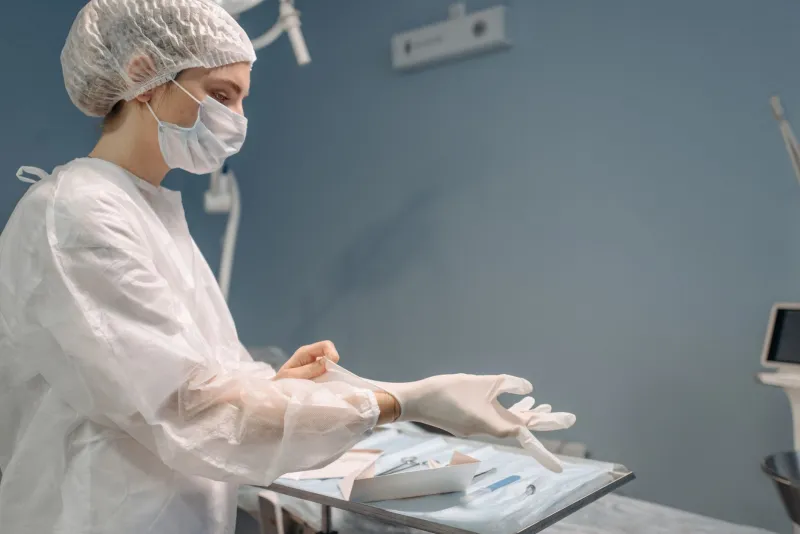
When most Americans picture what happens inside an operating room, they envision the surgeon — gloved, focused, commanding the procedure with precision. What they rarely picture is the person standing just to the surgeon's right, eyes scanning every instrument, every hand, every movement across the sterile field with an alertness that never wavers from the first incision to the final suture.
That person is the surgical technologist, and at SteriPuram, we believe their role deserves far more recognition — not only within the healthcare community, but among the patients whose outcomes depend so heavily on what these professionals do.
What Is the Sterile Field, and Why Does It Matter?
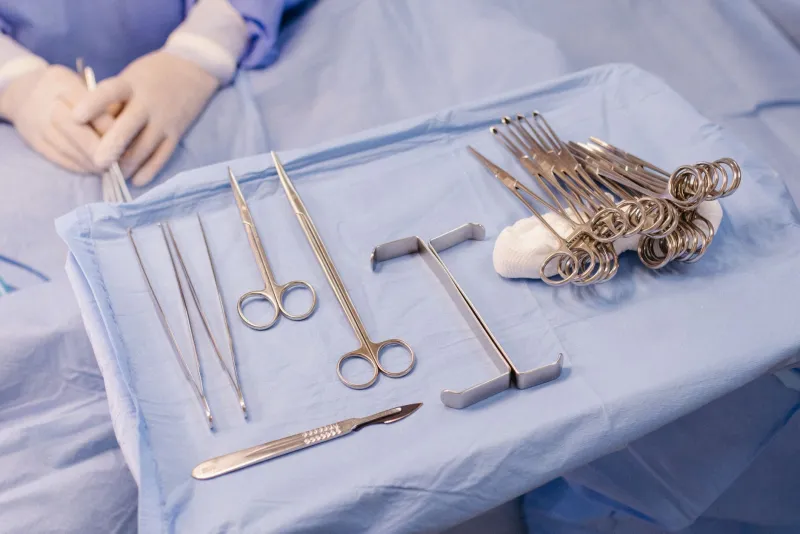
Before understanding the surgical technologist's responsibilities, it helps to understand what they are protecting. The sterile field is a precisely defined zone surrounding the operative site — encompassing the draped patient, the instrument table, and every item within that boundary that has been sterilized to eliminate microbial contamination.
Breaching that field, even momentarily, introduces the possibility of surgical site infection (SSI). According to the Centers for Disease Control and Prevention, SSIs account for roughly 20 percent of all healthcare-associated infections in the United States, affecting hundreds of thousands of patients annually and contributing to extended hospital stays, additional surgeries, and in severe cases, life-threatening sepsis.
The sterile field is not a passive boundary. It requires constant, active maintenance throughout the entire procedure — and that maintenance falls primarily on the surgical technologist.
A Role Built on Vigilance, Not Deference
Surgical technologists — sometimes called scrub techs or operating room technologists — are credentialed professionals who complete accredited surgical technology programs, typically two years in length, followed by national certification through the National Board of Surgical Technology and Surgical Assisting (NBSTSA). Their training covers anatomy, surgical procedures, sterile technique, and the psychological demands of working in high-stakes environments where a single lapse can cascade into serious patient harm.
What distinguishes their position in the operating room is a specific, unwavering mandate: protect the sterile field at all costs.
This is not a passive assignment. It requires the scrub tech to track multiple variables simultaneously — the location of every instrument, the movement of every team member near the sterile boundary, the integrity of every gown and glove in use, and the moment-to-moment condition of the draped operative site. While the surgeon concentrates on the procedure itself, the surgical technologist maintains the broader situational awareness that keeps infection prevention intact.
Real Scenarios, Real Consequences
To appreciate the weight of this responsibility, consider the kinds of judgment calls a surgical technologist may face during a single procedure.
The contaminated pass. A circulating nurse — who operates outside the sterile field — reaches across the boundary to hand a supply directly to the surgeon. The scrub tech intervenes immediately, redirecting the exchange to prevent a non-sterile hand from entering the protected zone. This interaction happens in seconds, often mid-procedure, and requires the confidence to redirect a colleague without hesitation.
The questionable instrument. An instrument is passed back after use and the scrub tech notices particulate matter or a compromised packaging seal that was not caught during the initial count. Rather than allowing it back into the field, they remove it, notify the team, and document the discrepancy. The brief interruption is far preferable to the alternative.
The gown breach. A team member leans across the sterile drape, and their non-sterile sleeve makes contact with an instrument. In the midst of a complex procedure, with everyone focused on the operative site, the scrub tech is often the only person who catches it. They call it out — calmly, clearly, and without apology — because their professional obligation to the patient supersedes any social reluctance to interrupt.
These are not hypothetical situations. They are the ordinary texture of a surgical technologist's workday, repeated across operating rooms in hospitals, ambulatory surgical centers, and specialty clinics throughout the country.
Training for the Unscripted Moment
One of the most demanding aspects of surgical technology training is preparation for scenarios that cannot be fully anticipated. Students learn sterile technique through rigorous repetition, but they also develop the professional judgment to recognize contamination events that fall outside the textbook — a subtle movement, an unusual sound, a gut-level recognition that something has gone wrong before anyone else has registered it.
Many programs incorporate simulation environments that replicate the pressure and pace of live procedures, training students to maintain composure and decisive communication under conditions designed to test their attention. The goal is not simply technical proficiency; it is the cultivation of a mindset that treats every moment in the operating room as consequential.
Board-certified surgical technologists are also required to pursue continuing education to maintain their credentials, ensuring that their knowledge of evolving sterile technique standards and infection control guidelines remains current. In a field where protocols are regularly updated in response to new evidence, this ongoing commitment is not optional — it is a professional obligation.
Staffing Levels and Patient Risk: A Connection Patients Rarely Know to Ask About
Here is where patient advocacy becomes directly relevant. Not every surgical facility staffs its operating rooms with a dedicated, certified surgical technologist on every case. In some settings, scrub duties are delegated to personnel with less specialized training, or a single technologist may be expected to cover responsibilities that realistically require undivided attention.
Research consistently supports the connection between proper surgical team composition and patient outcomes. When sterile field management is compromised by understaffing or inadequate credentialing, the margin for error narrows — and the consequences fall on the patient.
Before any elective procedure, patients have both the right and the responsibility to ask their facility about team composition. Specifically:
- Will a certified surgical technologist be present and dedicated to scrub duties during my procedure?
- What is the facility's policy on sterile field management and breach response?
- How does the facility credential and verify the ongoing training of its surgical support staff?
These are not intrusive questions. Any facility committed to genuine sterile standards will welcome them.
Precision Care Requires the Full Team
At SteriPuram, our editorial mission reflects a core conviction: that precision care is a team effort, and that every member of the surgical team — from the surgeon to the sterile processing technician to the scrub tech at the instrument table — contributes to the outcome a patient experiences.
The surgical technologist does not receive the credit their role deserves, in part because their best work is invisible. When they perform flawlessly, the sterile field holds, the procedure concludes without incident, and the patient wakes up without infection. There is no dramatic moment, no visible intervention — just a clean recovery that patients and families attribute entirely to the surgeon's skill.
But when the sterile field collapses — when a contamination event goes unchecked, when an instrument breach is missed, when a hand-off goes wrong — the consequences are anything but invisible. They appear days later in a wound that will not heal, in a fever that signals something deeper, in a return to the operating room that should never have been necessary.
The guardian at the table prevents that outcome, one split-second decision at a time. Patients deserve to know that person exists — and to ensure, before they go under anesthesia, that their facility has placed a qualified one in the room.