When 'Sterile' Is No Longer Safe: The Silent Risks of Expired and Improperly Stored Medical Supplies
When 'Sterile' Is No Longer Safe: The Silent Risks of Expired and Improperly Stored Medical Supplies
There is a reasonable assumption most Americans carry into any medical facility: that the supplies used during their procedure are clean, safe, and exactly as labeled. When a nurse tears open a sterile gauze pack or a surgical technician reaches for a wrapped instrument tray, patients naturally trust that everything is in order. That trust is not unfounded — but it is also not unconditional.
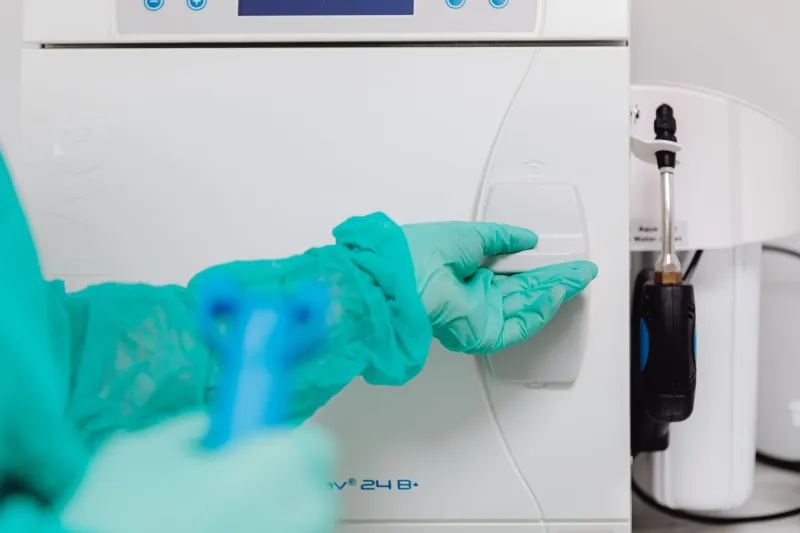
The sterility of a medical supply is not a permanent state. It is a carefully maintained condition that can be silently undermined by something as mundane as a torn corner on a package, a storage room that runs a few degrees too warm, or a supply that sat on a shelf six months past its expiration date. These are not hypothetical edge cases. They are documented vulnerabilities in healthcare supply chain management that the US Food and Drug Administration (FDA), the Joint Commission, and infection control specialists take seriously — and that patients deserve to understand.
 Photo: Joint Commission, via image.slidesharecdn.com
 Photo: US Food and Drug Administration, via as1.ftcdn.net
What an Expiration Date Actually Means on a Sterile Supply
Unlike a carton of milk, a sterile medical supply does not spoil in a way that is immediately visible or detectable by smell. The expiration date printed on a sterile wrap, catheter package, or surgical drape communicates something more specific: it marks the outer boundary of the manufacturer's validated guarantee that the product inside remains uncontaminated under ideal conditions.
Beyond that date, the manufacturer can no longer assure that the barrier properties of the packaging will hold, that materials have not degraded, or that the sterilization achieved during manufacturing remains effective. In some product categories — such as implantable devices, sutures, and pre-filled syringes — the consequences of using an expired item can include device failure, infection, or an inflammatory response that complicates recovery.
US healthcare facilities operating under accreditation standards from organizations such as the Joint Commission or the Accreditation Association for Ambulatory Health Care (AAAHC) are required to implement first-in, first-out (FIFO) inventory rotation practices — meaning older supplies are used before newer ones — and to conduct regular audits that pull expired items from circulation before they reach a patient. When those systems break down, the risk is real.
The Role of Packaging Integrity — and Why It Matters More Than You Think
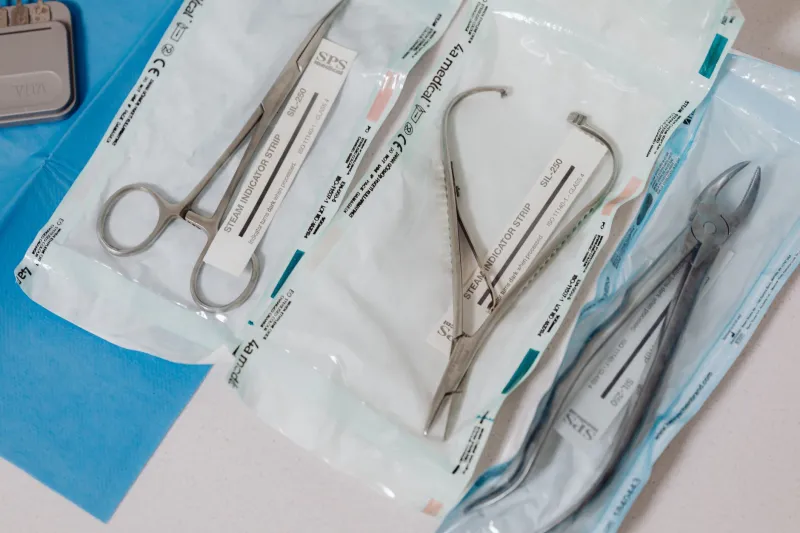
Expiration dates are only one piece of the puzzle. Even a supply well within its labeled shelf life can be rendered unsafe by compromised packaging. Sterile barriers — the pouches, wraps, and sealed trays that maintain a germ-free interior — are engineered to withstand routine handling under normal conditions. They are not indestructible.
A small puncture, a peel-open seal that has partially separated, moisture infiltration from a leaky storage area, or compression damage from improper stacking can all create pathways for microbial contamination to enter a package without any obvious visual alarm. Healthcare workers trained in sterile technique are taught to inspect every package before opening it, checking for pinholes, tears, water stains, and seal integrity. However, in high-volume or understaffed environments, these checks can become rushed or inconsistent.
The Association for the Advancement of Medical Instrumentation (AAMI) publishes detailed guidance on sterile packaging standards, and the FDA regulates sterile device packaging as part of its broader medical device oversight. Despite these frameworks, real-world audits and accreditation surveys have repeatedly identified packaging integrity failures as a recurring vulnerability in facility supply management.
Storage Conditions: The Factor Patients Rarely Consider
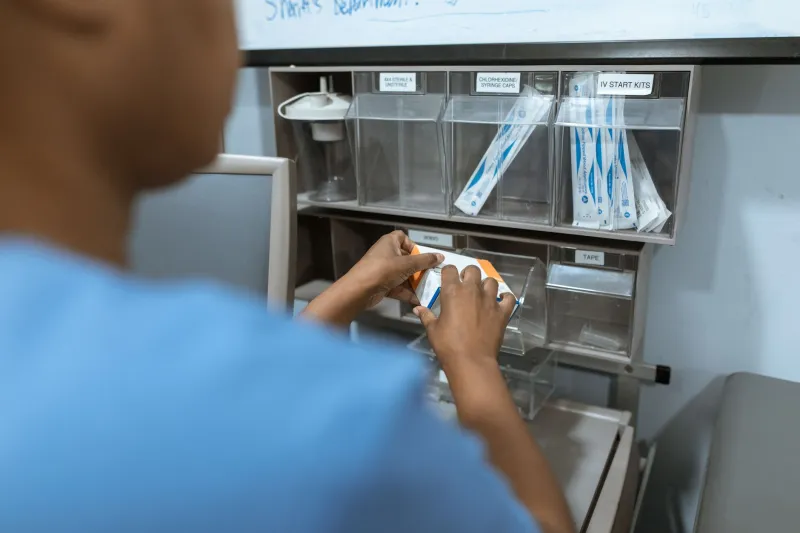
Beyond dates and packaging, the physical environment where sterile supplies are stored plays a critical role in maintaining their integrity. Most sterile medical supplies are designed to be stored within specific temperature and humidity ranges — conditions that, if exceeded, can accelerate material degradation, weaken seal adhesives, and create conditions favorable to microbial growth on the outer packaging.
US healthcare facilities are generally required to maintain supply storage areas within defined environmental parameters, with monitoring logs and corrective action protocols in place for excursions. A storage room that experiences a summer HVAC failure, a basement supply closet prone to humidity, or a portable supply cart left near a heat source may seem like minor operational inconveniences — but in the context of sterile supply integrity, these are meaningful risks.
Facilities that undergo accreditation surveys are evaluated on their environmental monitoring practices, storage organization, and documentation. Patients being treated in facilities that are not accredited — or that have lapsed in their accreditation — may have fewer assurances that these standards are being consistently met.
Real-World Consequences: When the System Fails
The consequences of sterile supply mismanagement are not theoretical. Across the United States, there have been documented cases in which patients experienced surgical site infections, bloodstream infections, or device-related complications traced back to compromised sterile supplies. In some instances, state health departments and the Centers for Disease Control and Prevention (CDC) have been called in to investigate clusters of post-procedure infections at outpatient surgery centers and hospital facilities.
 Photo: Centers for Disease Control and Prevention, via e-mobilni.pl
These events rarely make national headlines, but they are reported through healthcare surveillance systems and accreditation investigations. They serve as reminders that the sterile supply chain — from manufacturer to storage room to operating table — requires vigilance at every link.
What Patients and Families Can Reasonably Ask Before a Procedure
Empowerment in healthcare does not require patients to become infection control auditors. It does, however, involve knowing that asking questions is both appropriate and welcomed by reputable facilities. Before an elective or scheduled procedure, patients and their advocates may consider raising the following points with their care team or facility administrators:
-
Ask about accreditation status. Facilities accredited by recognized bodies are held to defined sterile supply management standards. Asking whether a facility is currently accredited — and by whom — is a reasonable and straightforward question.
-
Observe the environment. A well-organized, clean supply area is a positive indicator. Cluttered storage, visible moisture damage, or supplies left in open or non-climate-controlled areas are worth noting.
-
Request transparency about supply inspection practices. Asking whether staff are trained to inspect sterile packaging before use, and whether expired supplies are regularly audited, signals that you are an engaged patient.
-
Pay attention to how supplies are handled in your presence. A clinician who opens a sterile package and sets the contents on a non-sterile surface, or who does not inspect the package before opening, is not following best practice.
-
Trust your instincts. If something seems disorganized, rushed, or inconsistent with the care standards you expect, it is appropriate to ask for clarification or to request a conversation with a supervisor.
A Shared Responsibility
Maintaining the integrity of sterile supplies is, first and foremost, the responsibility of healthcare facilities and the professionals who work within them. Robust inventory management systems, properly trained staff, environmental monitoring, and a culture of accountability are the institutional foundations that protect patients every day.
At the same time, an informed patient is a safer patient. Understanding that a sterility label represents a conditional guarantee — one that depends on proper storage, intact packaging, and timely use — equips patients to engage more meaningfully with their care teams and to recognize when something may warrant a closer look.
At SteriPuram, our commitment is to precision care and sterile standards precisely because we understand how much depends on getting these details right. The supply closet may be invisible to most patients, but what happens inside it is anything but inconsequential.